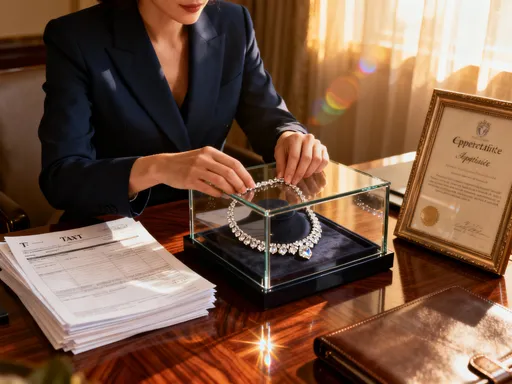
How I Turned Jewelry into Smart Tax-Saving Investments
What if your favorite necklace could do more than just sparkle? I never thought my jewelry collection would become part of my investment strategy—until I discovered how smart tax planning can transform luxury assets into wealth-preserving tools. It’s not just about buying gold or diamonds; it’s about holding, timing, and structuring them the right way. Let me walk you through how this overlooked asset class can work harder while keeping more of what you earn. With rising inflation, market volatility, and growing awareness of alternative investments, more individuals are turning to tangible assets that hold value across generations. Jewelry, when selected wisely and managed strategically, offers not only emotional significance but measurable financial benefits—especially when aligned with thoughtful tax practices. This is not about speculation or quick profits; it’s about long-term value preservation, disciplined ownership, and the quiet power of planning ahead.
The Hidden Power of Jewelry as an Asset
Jewelry is often viewed as a personal indulgence—a symbol of celebration, love, or achievement. Yet beneath its aesthetic appeal lies a deeper financial reality: high-quality pieces made from precious metals like gold, platinum, and silver, along with rare gemstones such as diamonds, rubies, and emeralds, carry intrinsic value recognized across cultures and centuries. Unlike stocks or bonds, which derive worth from market sentiment or corporate performance, fine jewelry is a physical asset whose base value is tied to the scarcity and demand for its materials. This tangibility makes it resistant to digital collapse, currency devaluation, and economic uncertainty—qualities that have long made gold a safe-haven investment during times of crisis.
But the financial potential of jewelry extends beyond mere material worth. Rare or historically significant pieces—such as vintage Art Deco rings, signed designs from renowned houses, or gemstones with exceptional clarity and color—can appreciate substantially over time. For instance, a well-documented diamond ring from the 1940s by a master jeweler may command prices far exceeding its original cost, driven by collector interest and limited supply. This appreciation potential transforms jewelry from mere adornment into a legitimate alternative asset class, one increasingly acknowledged by wealth advisors and tax professionals alike. In fact, some family offices now include fine jewelry in diversified portfolios alongside art, wine, and classic cars.
Despite these advantages, many overlook jewelry’s role in financial planning due to its emotional associations. A brooch passed down from a grandmother, a wedding band, or an anniversary gift often carries sentimental weight that clouds objective valuation. While these connections are meaningful, they can also lead to poor financial decisions—such as refusing to sell a piece at peak market value or overestimating its resale price. The key is to separate emotion from economics when assessing an item’s investment merit. Not every piece qualifies as a true asset; only those with verifiable quality, authenticity, and market demand should be considered part of a strategic holdings plan. By recognizing jewelry’s dual nature—as both heirloom and investment—individuals can make informed choices that honor both heart and balance sheet.
Why Tax Planning Matters in Physical Asset Investing
Investing in jewelry goes beyond selecting beautiful or valuable pieces; it requires understanding how tax rules apply to physical assets. Unlike income from wages or dividends, gains from selling jewelry are typically treated as capital gains, but the classification depends on several factors—including whether the item is deemed a collectible or an investment-grade asset. In many jurisdictions, including the United States, collectibles such as rare coins, stamps, and certain types of jewelry are subject to higher capital gains tax rates than traditional investments like stocks. This means that failing to plan properly can result in a significantly larger tax bill, potentially erasing much of the profit.
The tax implications begin at the point of acquisition. If you purchase jewelry without proper documentation—such as a detailed receipt or appraisal—it becomes difficult to establish your cost basis, which is essential for calculating taxable gain. Suppose you buy a gold bracelet for $10,000 but fail to keep the invoice. Years later, when you sell it for $18,000, the tax authority may assume a lower cost basis or even treat the entire amount as taxable income. This lack of proof can trigger audits, penalties, and disputes that undermine the financial benefit of the sale. Therefore, every transaction involving jewelry must be treated with the same seriousness as buying real estate or securities.
Another critical factor is how the asset is used. If jewelry is worn regularly and considered personal property, it may not qualify for favorable tax treatment upon sale. However, if it is held primarily as an investment and kept in secure storage, it may be viewed differently by tax authorities. The distinction matters because investment-held assets may allow for deductions related to insurance, appraisal fees, or storage costs—though these vary by country and individual circumstances. Moreover, gifting jewelry during one’s lifetime can have gift tax implications, while transferring it after death may affect estate tax liability. These layers of complexity underscore why tax planning cannot be an afterthought. Without foresight, even a profitable sale can become a financial setback.
Timing Is Everything: Holding Periods and Tax Efficiency
One of the most powerful yet underutilized tools in jewelry investing is timing. How long you hold a piece directly impacts the tax rate applied to any profit when you eventually sell. In many tax systems, capital gains are categorized as either short-term or long-term, with long-term holdings benefiting from lower tax rates. For example, in the U.S., assets held for more than one year are eligible for long-term capital gains treatment, which currently ranges from 0% to 28%, depending on income level. In contrast, short-term gains—on items held less than a year—are taxed at ordinary income rates, which can exceed 37%. This difference can have a dramatic effect on net returns.
Consider a scenario where someone buys a sapphire pendant for $12,000 and sells it 10 months later for $17,000. Because the holding period is less than a year, the $5,000 gain is taxed as ordinary income. At a 32% tax rate, the investor pays $1,600 in taxes, leaving a net profit of $3,400. Now imagine the same person waits just three more months—crossing into long-term status—and sells for $17,500. The slightly higher sale price, combined with a 15% long-term rate, results in a tax of $750 and a net gain of $4,750—an increase of nearly 40% in after-tax profit. This example illustrates how patience and strategic timing can enhance returns without requiring additional risk or effort.
Timing also affects market conditions. Jewelry values, particularly for rare stones or designer pieces, can fluctuate based on trends, availability, and global demand. Selling during a peak period—such as when a particular gemstone is featured in high-profile auctions or fashion collections—can yield higher prices. Conversely, liquidating during a downturn may result in losses or break-even outcomes. Therefore, investors should monitor market signals and consult appraisers before deciding to sell. Additionally, coordinating the sale with other financial events—like a low-income year or retirement—can further reduce tax exposure. By aligning personal circumstances with market timing and tax rules, individuals can maximize the efficiency of their jewelry investments.
Documentation: Building a Bulletproof Investment Trail
No matter how valuable a piece of jewelry may be, its worth in the eyes of the tax authority depends on what can be proven. Without clear, credible documentation, even a million-dollar diamond ring might be treated as a personal item with minimal value. This is why building a comprehensive record trail is not optional—it’s essential for protecting your investment and ensuring compliance. The foundation of this trail includes original purchase receipts, third-party appraisals, authenticity certificates, and photographs. Each document serves a distinct purpose: receipts establish cost basis, appraisals confirm market value, and certificates verify materials and craftsmanship.
For inherited or gifted pieces, additional documentation becomes crucial. A letter of provenance from the previous owner, a copy of a will, or a formal gift declaration helps establish legal ownership and acquisition date—both of which influence tax treatment. For example, inherited jewelry often receives a stepped-up basis, meaning the cost basis is adjusted to the market value at the time of the original owner’s death. This can significantly reduce or eliminate capital gains tax upon sale. However, without documentation proving inheritance, the IRS may assume the item was purchased at a nominal value, leading to higher taxes. Therefore, families should maintain organized records of intergenerational transfers, ideally with legal oversight.
Digital tools have made record-keeping more secure and accessible. Cloud storage platforms with encryption allow investors to store scans of documents safely, while password-protected digital vaults offer backup in case of physical loss. Some investors use specialized asset management apps designed for valuables, which enable tagging, valuation tracking, and reminder alerts for appraisal updates. Physical storage solutions—such as safe deposit boxes or insured home safes—should also be documented, including rental agreements and inventory logs. These records not only support tax reporting but also streamline insurance claims in case of theft or damage. In essence, meticulous documentation turns jewelry from a sentimental object into a professionally managed asset.
Selling Smart: Structuring Transactions for Lower Taxes
When the time comes to sell jewelry, the method chosen can significantly influence tax outcomes. There are multiple avenues—private sale, auction house, consignment shop, or trade-in—each with different reporting requirements and financial implications. Selling through a reputable auction house, for instance, often results in higher prices due to competitive bidding, and the transaction is typically well-documented, making it easier to report accurately. However, auction houses charge seller commissions, which reduce net proceeds. Consignment shops offer convenience but may offer lower payouts and less transparency. Private sales can yield good prices but require extra diligence to ensure proper documentation and tax compliance.
From a tax perspective, the structure of the sale matters as much as the price. One effective strategy is the installment sale, where the seller receives payments over time rather than a lump sum. This approach can help manage income recognition, potentially keeping the seller in a lower tax bracket in any given year. For example, someone in a high-income year might defer part of the sale to the following year to avoid pushing into a higher tax bracket. However, installment sales require formal contracts and interest calculations, so professional advice is recommended.
Gifting jewelry to family members or donating it to qualified charities can also produce tax benefits. Charitable contributions of appreciated jewelry, if properly appraised and documented, may allow the donor to deduct the fair market value on their tax return, while avoiding capital gains tax altogether. Similarly, gifting during life can remove the asset from the donor’s estate, reducing future estate tax exposure. However, gift tax rules apply, and donations require IRS Form 8283 for items valued over $500. Barter transactions—such as trading jewelry for services or other goods—must also be reported as taxable income based on the item’s fair market value. Ignoring these rules can lead to penalties, so transparency is key.
Integrating Jewelry into Broader Wealth Strategies
Jewelry should not be managed in isolation but as part of a cohesive financial plan. When aligned with estate planning, trusts, and overall investment goals, it can play a strategic role in wealth transfer and tax efficiency. For example, placing valuable jewelry in an irrevocable trust removes it from the taxable estate while ensuring it passes to designated beneficiaries according to specific instructions. This approach can reduce estate tax liability and prevent family disputes over sentimental items. Trusts can also include conditions, such as delaying distribution until a beneficiary reaches a certain age, preserving both the asset and its value.
Life insurance is another tool that complements jewelry holdings. A policy can be used to cover potential estate taxes, ensuring that heirs don’t have to liquidate prized pieces to meet tax obligations. This is particularly useful for families with concentrated holdings in illiquid assets like fine jewelry or art. Regular appraisals—typically every two to three years—are essential to keep insurance coverage and estate valuations current. Outdated appraisals can lead to underinsurance or disputes among heirs, undermining the planning effort.
Coordination with other financial professionals is vital. An estate attorney can help structure transfers, a tax advisor can optimize reporting, and a financial planner can assess how jewelry fits within the broader portfolio. For instance, if a client holds a large portion of wealth in jewelry, the planner might recommend increasing liquidity elsewhere to maintain balance. The goal is not to maximize jewelry holdings but to ensure they support long-term financial health. When integrated thoughtfully, jewelry becomes more than a personal treasure—it becomes a functional part of a resilient wealth strategy.
Risks, Realities, and What Most Investors Overlook
While jewelry can be a smart investment, it is not without risks. One of the most significant challenges is liquidity. Unlike stocks or mutual funds, which can be sold quickly on public markets, finding a buyer for a high-value piece can take time, especially if it is unique or requires specialized knowledge. This illiquidity means investors should not rely on jewelry as an emergency fund or short-term cash source. Additionally, market demand for certain gemstones or styles can shift unexpectedly. For example, the popularity of large solitaire diamonds has declined in recent years as consumers favor lab-grown alternatives or colored stones, affecting resale values.
Valuation is another area of complexity. Unlike standardized assets, jewelry is highly subjective in value. Two appraisers may assign different values based on cut, color, clarity, and market trends. This subjectivity increases the importance of using certified, independent appraisers rather than relying on retail replacement values, which are often inflated for insurance purposes. Emotional attachment further complicates matters. Many people overvalue family heirlooms simply because of their history, even if the piece lacks rarity or craftsmanship to justify a high market price. It’s crucial to distinguish between sentimental worth and financial worth.
Due diligence is essential before acquiring any piece for investment. Buyers should research the reputation of the seller, verify certifications (such as GIA reports for diamonds), and understand the costs of ownership—including insurance, maintenance, and storage. Impulse purchases, especially those driven by sentiment or fashion, rarely make sound investments. Instead, focus on timeless design, proven quality, and verifiable provenance. By approaching jewelry with the discipline of an investor rather than the passion of a collector, individuals can avoid common pitfalls and build a portfolio that stands the test of time.
Jewelry, when approached with discipline and foresight, can be more than adornment—it can be a thoughtful component of wealth management. By combining smart acquisition habits with proactive tax planning, investors can preserve value, reduce liabilities, and pass on meaningful assets. The key isn’t just owning beautiful things, but owning them the right way. With proper documentation, strategic timing, and integration into broader financial goals, jewelry transforms from a personal luxury into a resilient, tax-efficient asset. In an era of economic uncertainty and evolving investment landscapes, this quiet, enduring form of wealth deserves a place in every well-rounded financial strategy.